
2026 World Cup: Spain’s Second Title, Mbappé’s Record and a Tournament on a New Scale
 Available in US
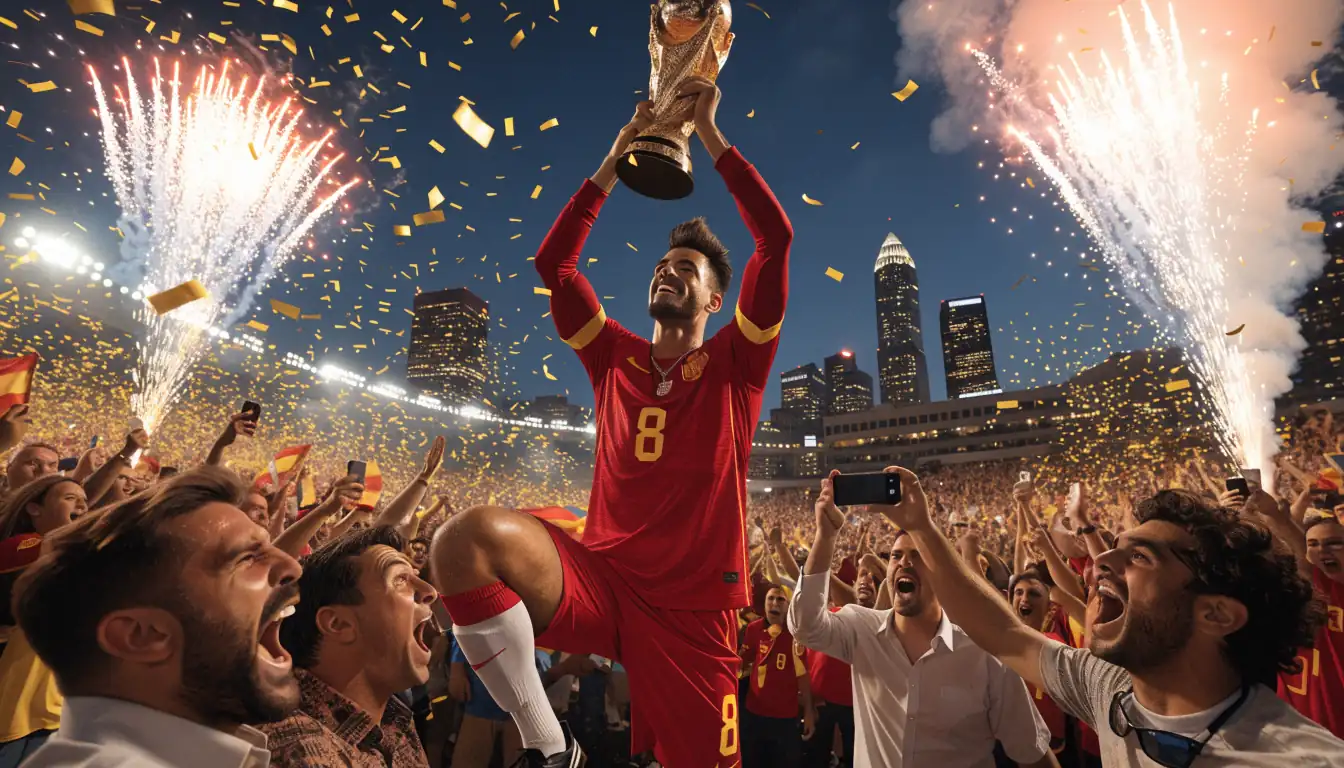
In the 106th minute of the World Cup final, Pedro Porro crossed from the right. Nico Williams headed the ball back into the center of the penalty area, and Ferran Torres struck it first time beneath the crossbar. Emiliano Martínez, who had repeatedly kept Argentina alive, had no chance. The goal was Torres’s first of the tournament, but it was enough to give Spain a 1–0 extra-time victory and its second World Cup title, 16 years after the first. FIFA’s final report
The day before, England and France produced ten goals in the bronze-medal match. England won 6–4, while France’s Kylian Mbappé finished the tournament with ten goals and established a new scoring record at the World Cup. At the other end of the standings, some teams made history simply by scoring once. The first World Cup with 48 participants included both Mbappé’s record and the debut of Cabo Verde, which did not lose a match in normal time. FIFA’s final standings, tournament statistics
How Spain won the World Cup
Spain opened the tournament with a goalless draw against Cabo Verde. For the reigning European champions, it was an unexpected result; for the debutants, it was their first World Cup point. The match also exposed a problem that returned in the final: possession alone was not enough when the opponent defended deep. Spain had to move defenders, find an unmarked player and exploit the brief moment when the defensive structure shifted. Against Cabo Verde, it never found the right finish. FIFA’s final standings
After that draw, Luis de la Fuente’s team won seven matches in a row. In the group stage, Spain defeated Saudi Arabia and Uruguay. In the round of 32, it beat Austria 3–0, with Mikel Oyarzabal scoring twice and right-back Pedro Porro adding the other goal. The next matches were closer. Spain defeated Portugal 1–0 and then beat Belgium 2–1 in the quarterfinals. Across three consecutive knockout rounds, the champions had to solve different tactical problems, but they never needed a penalty shootout. Knockout-stage results, report on Spain–Austria
The semifinal against France showed how important Spain’s players arriving from deeper positions had become. Oyarzabal opened the scoring from the penalty spot in the 22nd minute, and Porro scored the second after halftime. France, the 2022 finalist, lost 2–0 and failed to score for the first time in the tournament. Spain denied it the chance to equalize and reach the kind of open situation in which one successful Mbappé run could have changed everything. Porro again played a central role in the final, even though the decisive attack was recorded as Torres’s goal from Williams’s assist. France’s results, final report
Spain won the tournament after conceding just one goal. That record was particularly striking given the quality of its opponents in the later rounds. Portugal, France and Argentina all had players capable of deciding a match individually, yet none of them scored against Spain. Spain’s control of possession contributed to that defensive reliability. Opponents had to spend long periods defending and then find a way to advance after winning the ball. In the final, Argentina managed only two shots over 120 minutes, compared with Spain’s 20. FIFA’s final standings
Why the final lasted 120 minutes
Both teams entered the final unbeaten. Spain arrived in New Jersey as European champion, while Argentina was champion of South America and the defending world champion. Argentina had scored 19 goals in its previous rounds, but it did not register its first shot in the final until extra time. Lionel Messi, whose goals and passes had repeatedly rescued Argentina on its way to the final, spent long stretches away from positions where he could threaten. Spain forced him to receive the ball farther from goal and closed down his options afterward. FIFA’s final report
The first serious chance came in the fifth minute. Dani Olmo found Lamine Yamal on the right side of the penalty area, but Martínez blocked the shot at his near post. The goalkeeper later saved an effort from Oyarzabal and, in the second half, stopped Torres’s header following a Yamal cross. Near the end of normal time, Martínez again denied Spain when Yamal struck a dangerous free kick. He made 12 saves in total. According to the Associated Press, that was a record for a World Cup final. Each save moved Argentina closer to a penalty shootout and preserved its chances in a match largely controlled by Spain. FIFA’s final report, Associated Press report
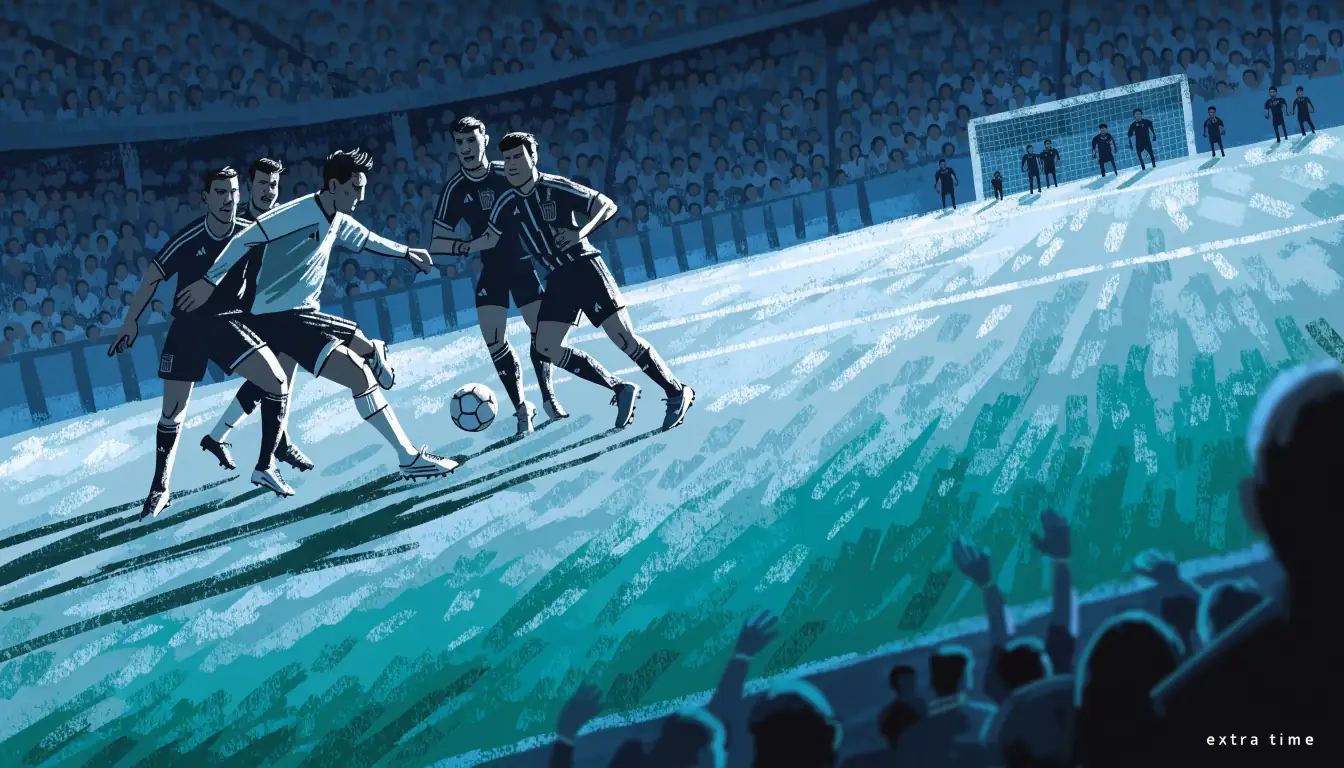
Argentina coach Lionel Scaloni had to replace both central defenders during the match. Lisandro Martínez went off before halftime, and Cristian Romero was substituted in the second half. In stoppage time, Enzo Fernández received a second yellow card for a foul on Pau Cubarsí. Argentina therefore entered extra time with a reshaped central defense and only ten players. Spain continued attacking down the flanks, and its fresh players found more opportunities to enter the penalty area. One Spanish goal was disallowed before Torres’s finish, and another was ruled out afterward. FIFA’s final report
The winning combination took only a few seconds. Porro sent the ball toward the far post, Williams returned it to a better shooting position, and Torres needed just one touch. Torres had started Spain’s opening match against Cabo Verde, then lost his place in the starting lineup and began the final on the bench. His tournament could easily have ended without a goal. Instead, he matched the achievement of Andrés Iniesta, whose extra-time strike in the 2010 final gave Spain its first World Cup. Both finals ended 1–0. FIFA on Ferran Torres
How Argentina reached the final
Argentina won all three group matches, but its knockout campaign immediately became a struggle for survival. Cabo Verde scored twice against the defending champions and took the match to extra time. Argentina eventually won 3–2. It then defeated Egypt by the same score and met Switzerland in the quarterfinals. The teams were level after 90 minutes, and Argentina finally secured a 3–1 victory in extra time. The two-goal margin in the final score concealed how long the outcome remained uncertain. Argentina–Cabo Verde report, knockout-stage results
The team’s character was most evident in the semifinal against England. Early in the second half, Anthony Gordon put England ahead. Argentina struggled to respond, but late in the match Messi created two chances that his teammates converted. Enzo Fernández scored first, followed by Lautaro Martínez. The 2–1 victory took Argentina to its seventh World Cup final.
Messi played in a World Cup final for the third time, following appearances in 2014 and 2022. Before him, only Brazil’s Cafu had appeared in three finals. Semifinal report, final statistics
Messi’s eight goals earned him the Silver Boot, and he also received the Silver Ball as the tournament’s second-best player. His passes decided the semifinal, while his finishing had been important in other matches. The final demonstrated how much Argentina depended on regularly getting him the ball in dangerous areas. Spain cut off that route and forced Argentina to spend most of the match close to its own goal. Scaloni’s team kept its hopes of defending the title alive until the end, but it never managed to turn the final around as it had against England. FIFA’s individual awards, final report
England’s bronze and France’s record
Thomas Tuchel’s England topped its group and then defeated the Democratic Republic of the Congo, Mexico and Norway. England beat Mexico 3–2 in Mexico City and overcame Norway 2–1 in extra time in the quarterfinals. It took the lead against Argentina in the semifinal but ultimately lost. The third-place match gave England an opportunity to end the tournament with a medal. The last time the national team had finished so high was in 1966, when it won the title at home. FIFA’s final standings, knockout-stage results
England led France 4–0 at halftime in Miami. The match might have ended comfortably, but France came back after the interval and scored four times. England answered with two more goals to win 6–4. Bukayo Saka scored a hat-trick and was named player of the match. The contrast with the final was extreme: in Miami, a four-goal advantage did not eliminate England’s anxiety, while the next day in New Jersey a single finish decided the champion. FIFA’s bronze-medal match report
France had defeated Sweden, Paraguay and Morocco before losing to Spain. After winning the 2018 World Cup and finishing runner-up in 2022, Didier Deschamps’s team ended 2026 in fourth place. Its main individual achievement came from Mbappé. He scored ten goals and won the Golden Boot for a second consecutive tournament.
His two goals against Senegal in the opening round made him France’s leading international scorer. By the end of the tournament, he had also become the leading scorer in World Cup finals history, with 22 goals. France’s tournament path, FIFA on Mbappé’s record
The other major individual awards went to Spanish players. Rodri won the Golden Ball, Unai Simón received the Golden Glove, and Pau Cubarsí was named the best young player. Simón also set a separate record: his scoreless run in World Cup matches reached 650 minutes, surpassing the previous mark held by Italy’s Walter Zenga. Spain’s three awards represented different areas of midfield and defense. Torres, the scorer of the tournament-winning goal, was named player of the final. 2026 World Cup awards, FIFA statistics
What the 48-team format changed
The tournament took place from June 11 to July 19 in the United States, Canada and Mexico. A total of 104 matches were played in 16 cities, and FIFA reported overall attendance of more than 6.8 million. The previous World Cup in Qatar had featured 32 teams and 64 matches.
The new format divided 48 teams into 12 groups. The top two teams in each group advanced, along with the eight best third-place teams. The addition of a round of 32 meant that a team needed to play eight matches to win the title instead of seven. FIFA schedule and results, attendance report
The group stage therefore carried different risks. Finishing third still offered a route forward, so goal difference could remain important even when a team could no longer catch the top two. At the same time, finishing first provided only the right to play one more knockout match. Argentina won its group without dropping a point, yet it still needed 120 minutes to get past Cabo Verde in the round of 32.
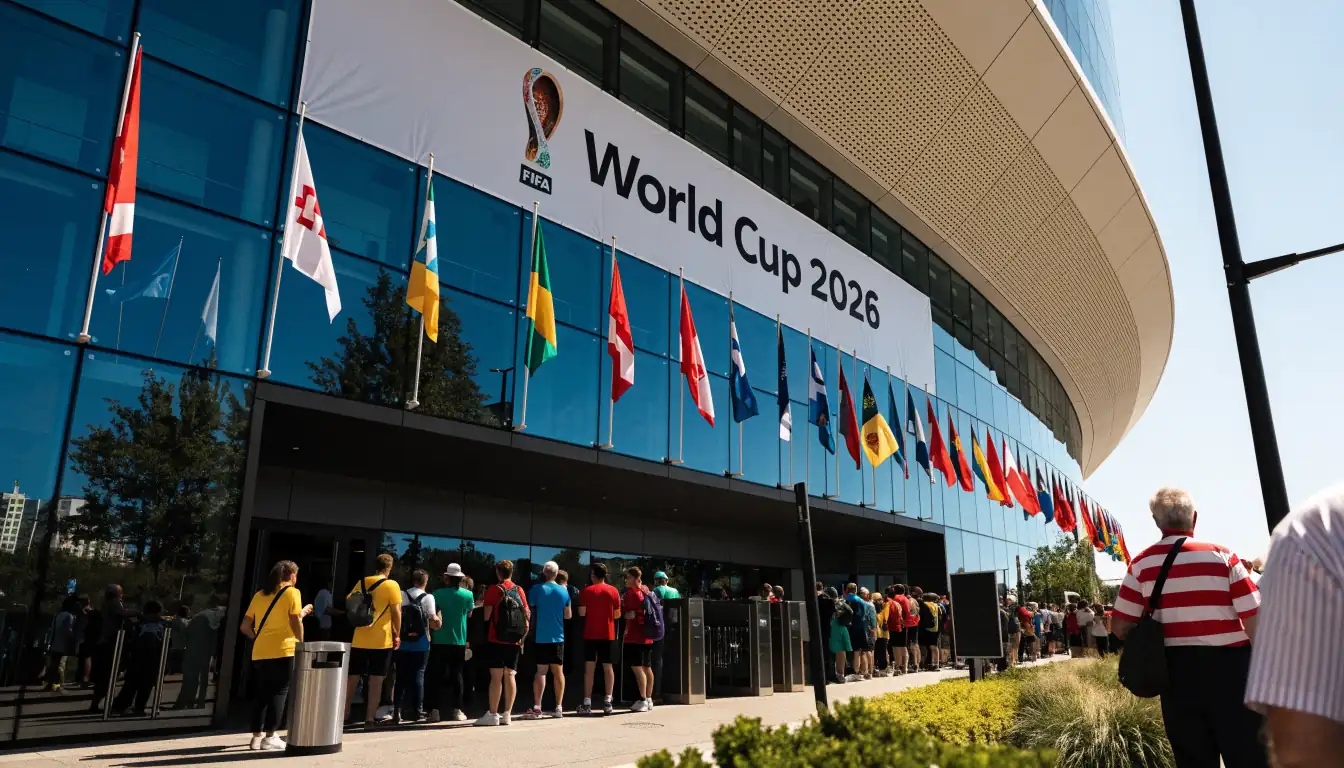
The additional knockout round increased the value of squad depth. It also gave debutants another chance to test themselves against a strong opponent. Knockout bracket, Argentina–Cabo Verde report
The 104 matches produced 308 goals. The overall record was partly a consequence of the increased number of games, but the average scoring rate also rose. There were 2.96 goals per match, the highest average since 1970. England and France contributed ten goals to the total, while Canada scored six in one match against Qatar.
The debutants also made their mark. All four first-time participants—Cabo Verde, Curaçao, Jordan and Uzbekistan—scored at least once. Jordan scored in all three of its group matches. FIFA tournament statistics
The expanded format was especially visible in the knockout field. Nine African teams reached the round of 32. Previously, no World Cup knockout round had featured more than two African teams. Egypt advanced from the group stage for the first time, defeated Australia on penalties and then lost to Argentina by a single goal. Morocco reached the quarterfinals.
A direct comparison between nine African knockout teams and the previous record of two is difficult because the opening knockout round itself was twice as large. Still, the expanded tournament gave African teams more opportunities to advance through one successful performance. FIFA confederation statistics, knockout-stage results
Cabo Verde, Canada and Norway
Cabo Verde’s story went far beyond its opening 0–0 draw with the eventual champions. The debutants drew all three group matches, including a 2–2 result against Uruguay, and reached the knockout stage. There, they held Argentina for 90 minutes before losing in extra time.
Across four matches, Cabo Verde faced three former world champions and did not lose to any of them in normal time. It did not win a match either. Its campaign demonstrated how far a team can go by remaining competitive even when the opponent controls more of the ball and initiative. FIFA statistics on debutants, Argentina–Cabo Verde report
Canada, playing at a home tournament, earned its first World Cup point and then recorded its first victory by defeating Qatar 6–0. Jonathan David scored a hat-trick in that match. Canada then eliminated South Africa in the first knockout round before losing 3–0 to Morocco in the round of 16.
Before 2026, Canada had never taken a point in the World Cup finals. Reaching the last 16 was therefore a significant achievement. Mexico and the United States also reached that stage, with Mexico losing to England and the United States losing to Belgium. All three hosts advanced from the first knockout round, but none remained for the quarterfinals. FIFA statistics on first achievements, knockout bracket
Norway produced one of the biggest knockout-stage surprises by defeating Brazil 2–1. Erling Haaland scored both Norwegian goals, taking his tournament total to seven at that point. Brazil responded with a late Neymar penalty but could not equalize. Norway then took England to extra time in the quarterfinals before losing 2–1.
The Brazil match also carried historical significance for Neymar. He became the second Brazilian after Pelé to score at four different World Cups. The match was one of the best nights in Norway’s football history, but it was also Neymar’s final appearance for Brazil. FIFA’s New Jersey match review, quarterfinal results
How the 2026 World Cup will be remembered
The first 48-team World Cup produced several different measures of success. England’s bronze medal was its best result in 60 years. Canada crossed a historic line by winning its first World Cup match and then reaching the round of 16. Cabo Verde changed expectations for a debutant. Mbappé set a record built across three tournaments. Messi appeared in a third final and again showed in the knockout rounds how two passes could alter an entire match within minutes. FIFA’s final standings, tournament awards
Spain’s title reflected its ability to change matches through different players. Oyarzabal scored early in the knockout stage, Porro made the difference in the semifinal, and Williams and Torres came off the bench to create the decisive moment in the final. Argentina held Spain scoreless for 105 minutes despite losing defenders and being reduced to ten men.
A minute later, Porro’s cross traveled across the penalty area, Williams returned the ball to the center, and Torres had precisely enough time for one shot. Across 104 matches, the tournament produced 308 goals. The final one determined who would lift the trophy. Final report, FIFA’s final statistics
Created by the "Foussballluwm" editorial team.
